BESS · Buyer's Guide
Containerized Energy Storage Systems: A Buyer's Guide to Specs, Sizing & Supplier Evaluation
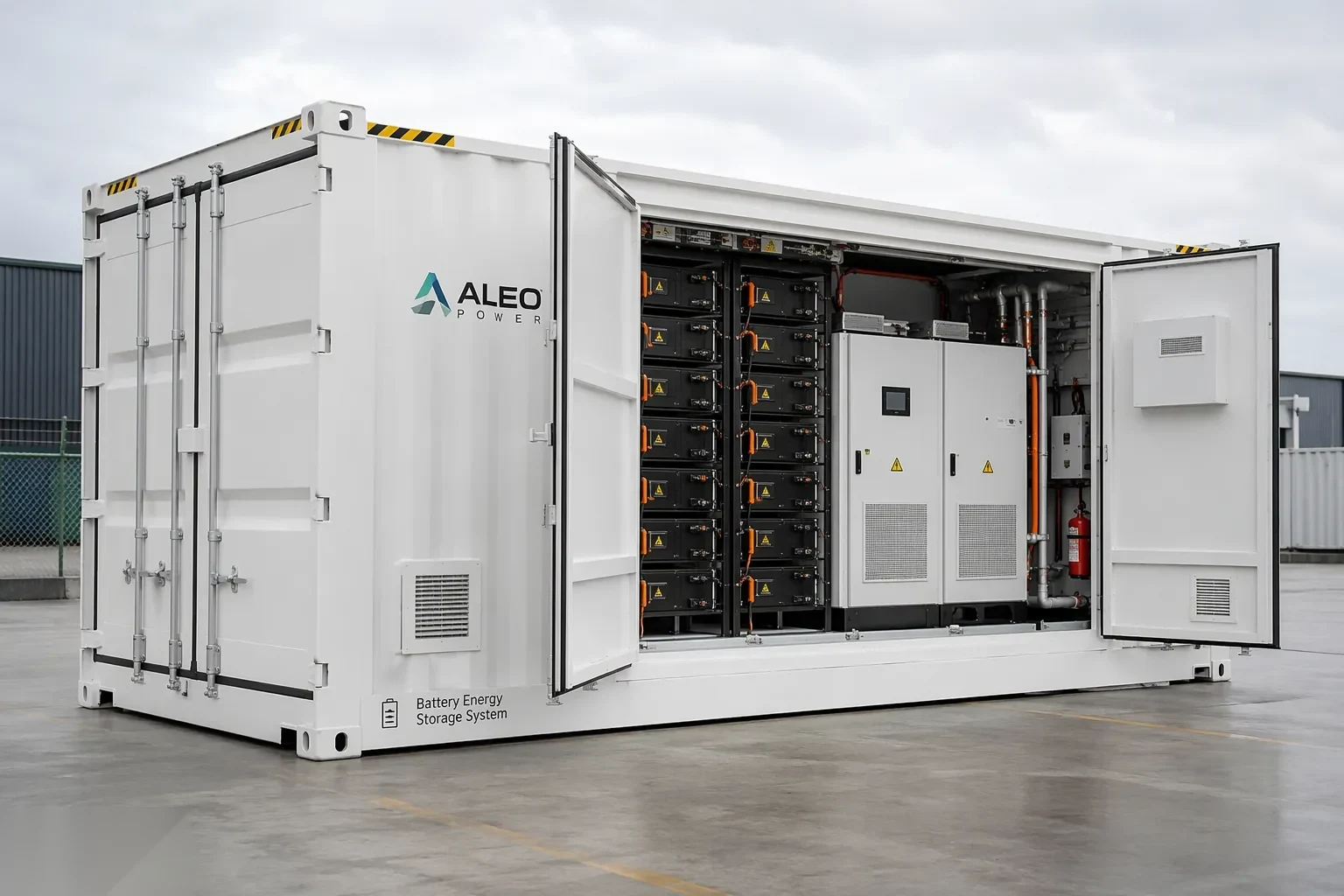
A containerized energy storage system packs batteries, power conversion, thermal management, and fire protection into a standard 10-ft, 20-ft, or 40-ft enclosure — arriving at site as a pre-integrated unit instead of a field assembly project. For C&I users, EPC contractors, and project developers, that integration is the point: commissioning in days instead of months, predictable performance, and factory-tested safety.
But not every container on the market carries the same quality. This guide decodes the specifications that actually matter, walks through sizing from your load data, and lists the verification steps — FAT, shipment inspection, commissioning — that separate a reliable supplier from a reseller with a paint booth. It reflects ALEO POWER's practice as a manufacturer: we build C&I cabinets and MWh-scale containerized systems in our own 40,000+ m² factory, FAT-test every unit before dispatch, and support commissioning in 60+ countries.
Key Takeaways
- ✓Chemistry first: insist on LFP cells rated ≥8,000 cycles at 90% DoD for C&I duty — cycle life, not upfront price, drives your cost per kWh.
- ✓Cooling decides real-world degradation: liquid-cooled systems hold cell temperature spread within about ±3 °C; air-cooled units run hotter and age faster in hot climates.
- ✓Size from a measured load profile: kW for power events, kWh for duration — never from PV nameplate.
- ✓Fire protection must be engineered, not bolted on: full-fluid suppression (e.g., perfluorohexanone) with pack-level detection is the credible baseline.
- ✓Pay milestones against evidence: witnessed FAT, documented shipment inspection, and a performance demonstration period after commissioning.
Table of Contents
- 1. What a Containerized BESS Is — and When to Choose One
- 2. The Specs That Actually Matter
- 3. LFP vs NMC: The Chemistry Decision
- 4. Liquid Cooling vs Air Cooling
- 5. Sizing Workflow: From Load Profile to kWh
- 6. Total Cost of Ownership: What the Warranty Really Says
- 7. Supplier Evaluation: FAT, Shipment Inspection, Factory Audit
- 8. Red Flags in a BESS Proposal
- 9. FAQ
- 10. Conclusion
1. What a Containerized BESS Is — and When to Choose One
A containerized energy storage system integrates battery racks, a PCS (bidirectional inverter), a battery management system, thermal control, fire suppression, and switchgear inside an ISO-dimension enclosure. Compared with building a battery room from components, the containerized approach offers three practical advantages:
- Factory integration. Wiring, protection coordination, and control logic are tested before the unit leaves the factory — not during your construction schedule.
- Faster deployment. A typical 20-ft unit lands, connects to a transformer and the site bus, and commissions within days. ALEO POWER's standard lead time from contract to FAT is about 35 days, with commissioning support included.
- Mobility and scalability. Containers relocate with project phases and parallel in blocks to MWh scale.
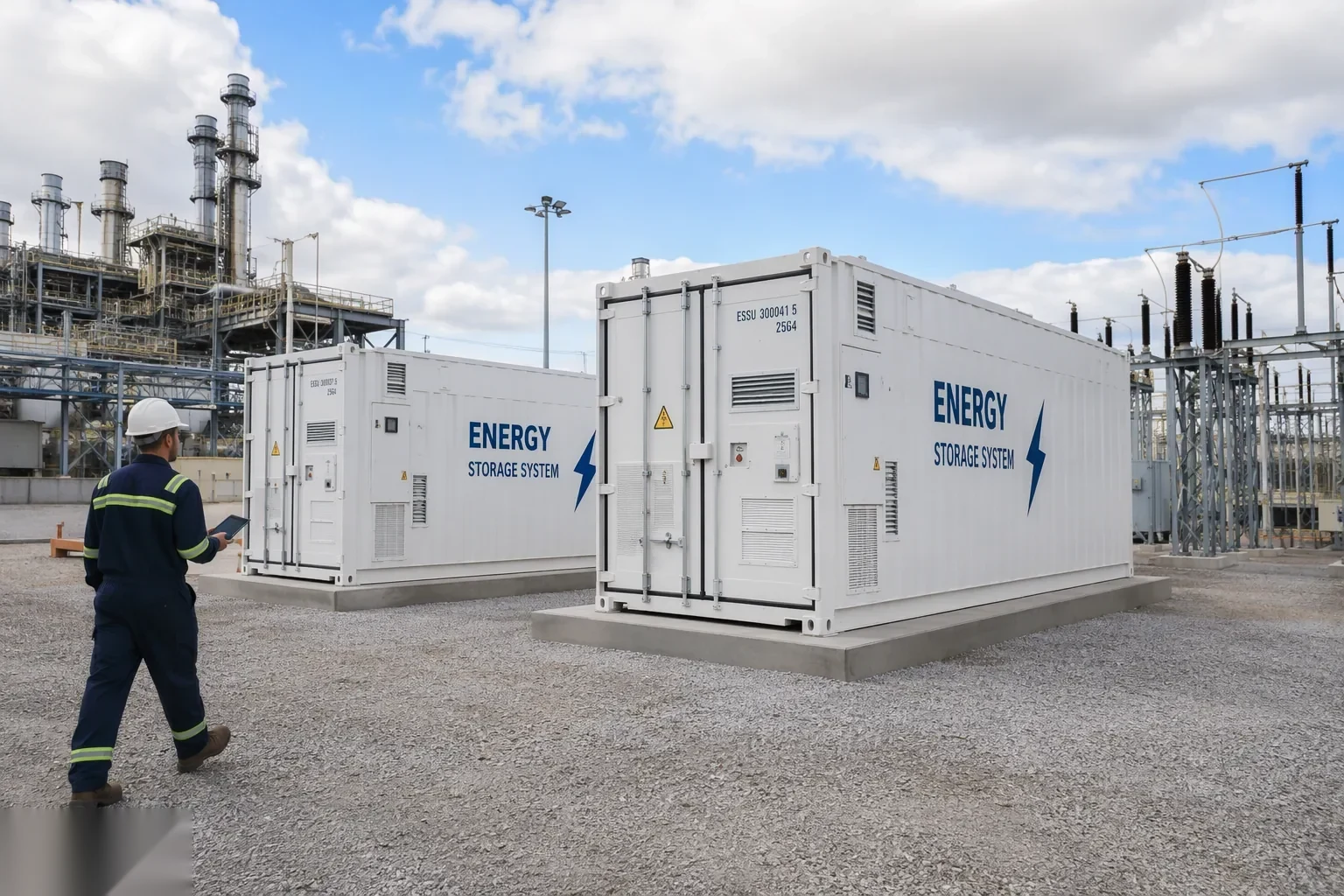
Choose a containerized system when you need 500 kWh and above, outdoor installation, or multi-MWh expansion. Below that range — for commercial buildings, factories, and telecom sites — pre-integrated outdoor cabinets in the 261–523 kWh class (like our Aleo-Smart series) usually fit better, footprint for footprint.
2. The Specs That Actually Matter
Datasheets are marketing until you know which lines predict performance. Rank these first:
| Spec | What to demand | Why it matters |
|---|---|---|
| Cell chemistry & format | LFP, 314 Ah class, Tier-1 cell maker | Safety and cycle life; prismatic LFP is the C&I standard |
| Cycle life | ≥8,000 cycles @ 90% DoD | Degradation, not calendar, sets C&I lifetime |
| PCS power | Matched to your power events (e.g., 125 kW per cabinet) | Undersized PCS = clipped peaks, wasted kWh |
| DC voltage window | e.g., 832 V (702–936 V) | Compatibility with your PCS/transformer design |
| C-rate | ≤0.5C continuous typical for LFP C&I | Higher C-rates trade life for power |
| Cooling | Liquid cooling with ±3 °C cell spread | Uniform temperature = uniform aging |
| Fire protection | Full-fluid suppression (perfluorohexanone), pack-level detection | Water damage risk vs. real extinguishing capability |
| Enclosure | IP54–IP65, C4/C5 corrosion class options | Outdoor duty without a building |
| Certifications | Grid-code certificates for your market (CE/UN38.3/IEC 62619; South African grid codes on the SL-EU family) | Interconnection approval depends on them |
3. LFP vs NMC: The Chemistry Decision
For stationary C&I storage, lithium iron phosphate (LFP) has effectively won the argument. NMC (nickel-manganese-cobalt) carries higher energy density — valuable in vehicles — but stationary systems buy hours, not kilograms.
- Safety: LFP's thermal runaway onset is substantially higher and less energetic than NMC's. In enclosures installed beside factories or in basements, that margin is the safety case.
- Cycle life: quality LFP cells now rate 8,000+ full equivalent cycles at 90% DoD; NMC typically delivers half that in stationary duty.
- Cost per kWh throughput: even where NMC hardware prices lower, doubling cycle life usually wins on levelized cost.
Specify LFP unless a space-constrained application genuinely requires NMC's density — a rare case in stationary storage.
4. Liquid Cooling vs Air Cooling
Cooling is the most under-specified system in a BESS — and the one that decides degradation in real climates.
Air cooling is cheaper upfront and adequate for mild climates with light duty. But C&I duty cycles and hot ambient temperatures expose its limits: cells at the rack center run measurably hotter than edge cells, temperature spread accelerates uneven aging, and auxiliary fans consume parasitic power year-round.
Liquid cooling circulates coolant against the cell faces, holding cell-to-cell temperature spread to roughly ±3 °C. In factory testing, that uniformity shows up as capacity fade curves that track the datasheet rather than diverging from it. For any installation where ambient exceeds 35 °C for long periods — which describes most of Africa, the Middle East, and South Asia — liquid cooling is the defensible default. All Aleo-Smart C&I cabinets and ALEO POWER's containerized systems use liquid-cooled battery sections for this reason.
5. Sizing Workflow: From Load Profile to kWh
Follow the data in this order:
Step 1 — Define the job. Peak shaving, backup, solar self-consumption, or microgrid stabilization each imply different duty. Write the primary use case down; it determines everything below.
Step 2 — Measure the profile. 4 weeks of 15-minute interval data minimum. Identify average load, peak kW, peak duration, and daily energy (kWh).
Step 3 — Power (kW). For peak shaving, size PCS ≥ measured peak minus grid/import limit. Example: 600 kW peak, 400 kW import limit → 200–250 kW PCS with headroom.
Step 4 — Energy (kWh). Energy = power × duration of the events you must cover. Two hours of the 250 kW peak = 500 kWh; one Aleo-Smart 523 kWh cabinet covers it with margin.
Step 5 — Duty and growth. Daily cycling workloads deserve the 8,000-cycle class cells. Plan paralleling for growth: cabinets and containers parallel more cheaply than they replace.
Want a second opinion on your numbers? Send your load profile and our engineers will sanity-check the sizing — duty cycle notes included.
6. Total Cost of Ownership: What the Warranty Really Says
The purchase price is one line in a 10-year cost stack. Evaluate:
- Cycle life vs. your duty: a system rated 8,000 cycles at 90% DoD cycled once daily lasts well beyond 15 years; a 4,000-cycle system in the same duty hits end-of-warranty capacity around year 8.
- Warranty terms: five years is the current baseline from quality manufacturers. Read the throughput cap (MWh) and the degradation floor (e.g., 70% of rated capacity) — those two clauses define what you actually own.
- Efficiency: round-trip efficiency of 88–92% is typical for liquid-cooled LFP systems. Each point of efficiency is revenue or fuel you keep every day.
- Auxiliary loads: cooling and controls draw 2–4% of throughput. Liquid cooling's parasitic draw is comparable to air at equal duty — the difference is what you get for it.
7. Supplier Evaluation: FAT, Shipment Inspection, Factory Audit
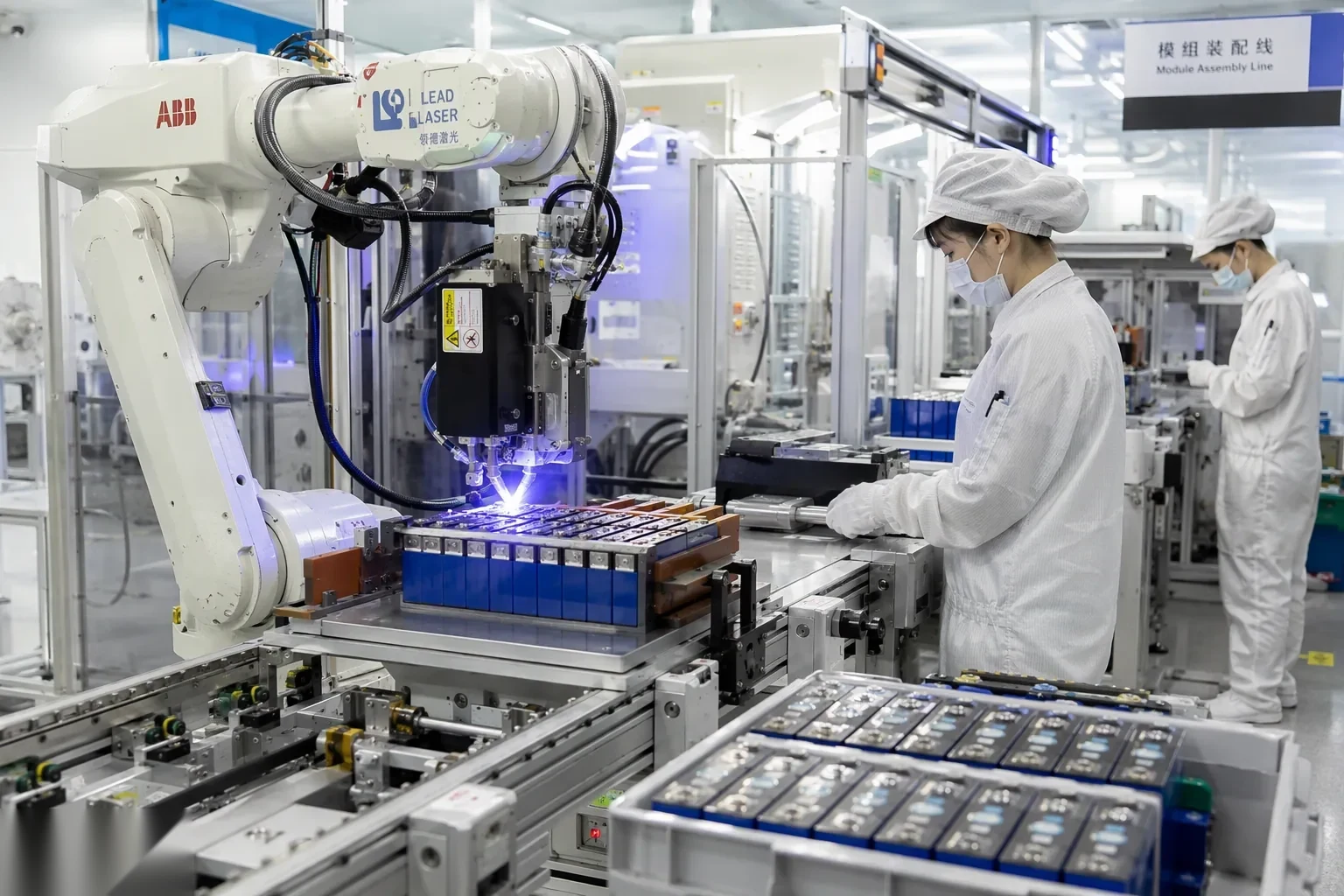
For anything above cabinet scale, structure verification into the payment milestones:
- Factory audit or third-party inspection. Verify the factory is real and the equipment in-house: pack assembly lines, formation/aging capacity, test bays. ALEO POWER's 500 MWh annual capacity across a 40,000+ m² site is typical of manufacturers — not traders — in this class.
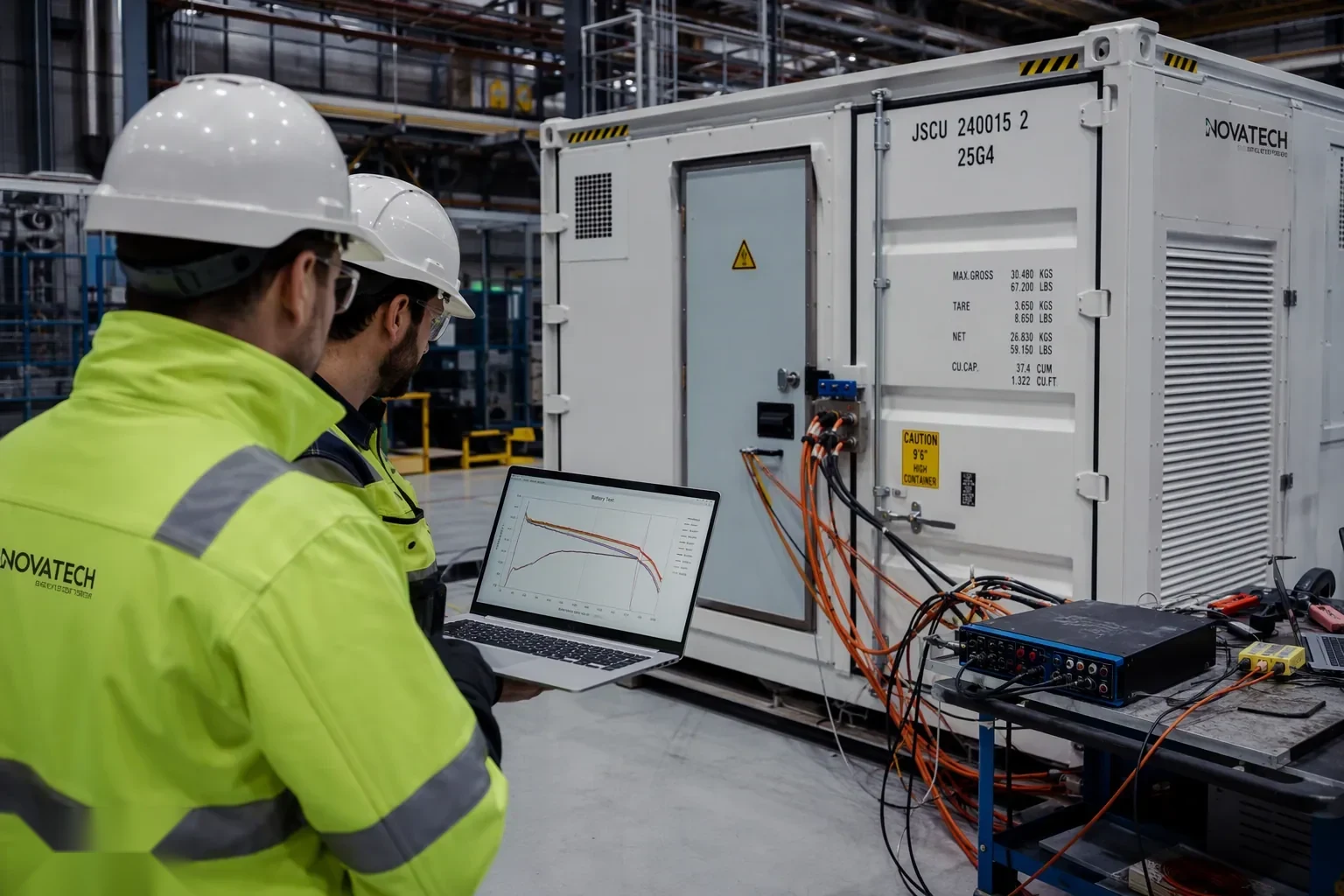
- Witnessed FAT. Minimum scope: full-capacity charge/discharge with efficiency measurement, protection tests (over/under-voltage, over-current, temperature, insulation monitoring), EMS functional tests, and a continuous 72-hour run. Recorded FAT video plus signed protocol is standard practice.
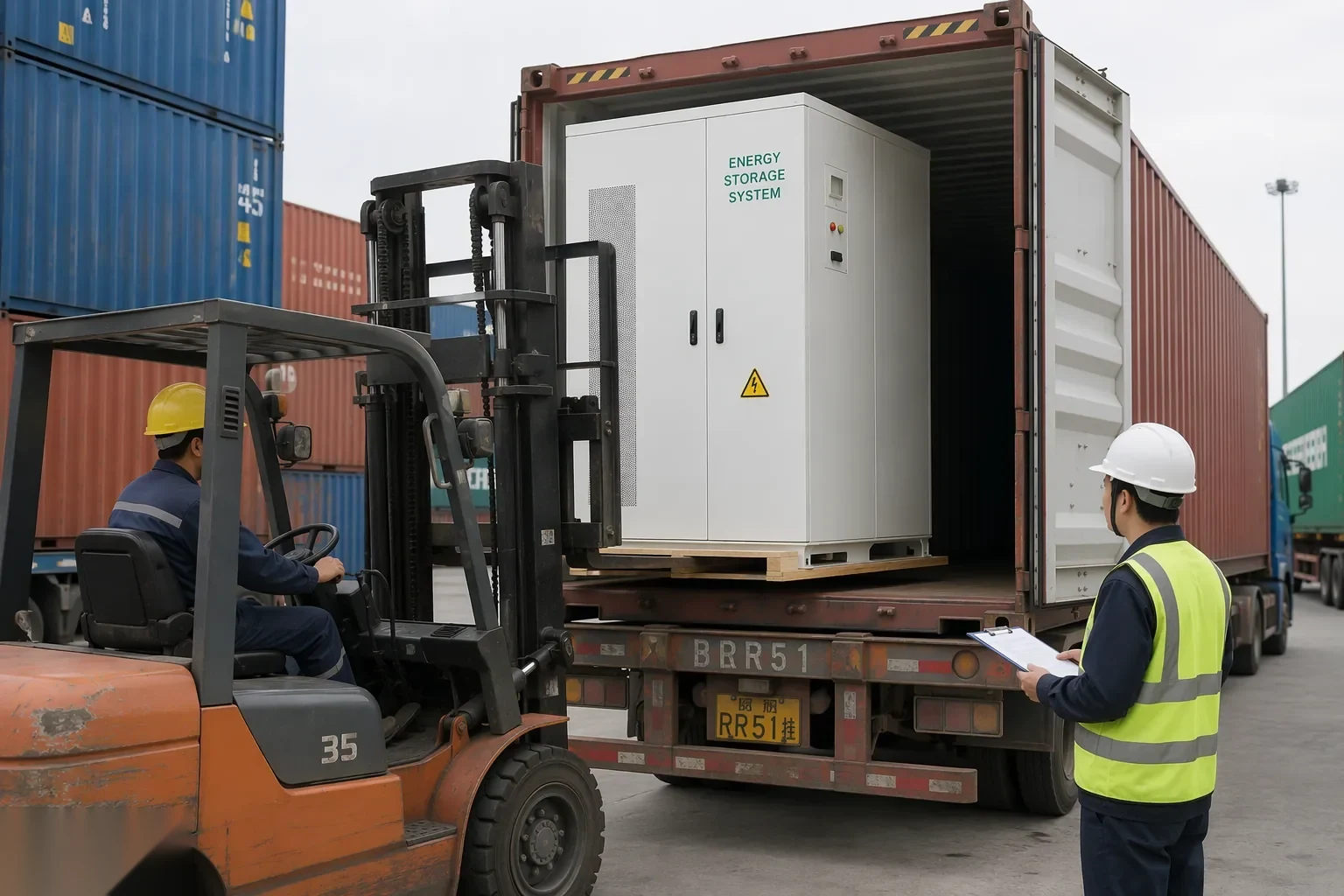
- Shipment inspection. Confirm serial numbers against the FAT protocol, check torque marks and seal integrity, photograph pre-lashing condition, and require the report with shipping documents. For sea freight, verify desiccant and vacuum-sealed cabinet status.
- Commissioning and demonstration. First energization with factory engineer support (remote or on-site), then a defined demonstration window — typically 30 days — verifying capacity and efficiency against the FAT record.
8. Red Flags in a BESS Proposal
- No FAT protocol offered, or FAT 'available at extra cost.' The test bay is where manufacturing quality is proven. Reluctance here is disqualifying.
- Cycle life quoted without DoD or temperature conditions. "10,000 cycles" at 50% DoD and 25 °C is a different product from 8,000 at 90% DoD.
- Air-cooled systems quoted for >40 °C ambient duty without derating data.
- Fire protection described as 'detection only' or water-based mist without justification. Insist on full-fluid suppression for enclosed lithium systems.
- Warranty with no throughput cap stated. Unlimited claims language usually hides a degradation floor you haven't seen.
- Trader with no serial-number traceability to a named cell manufacturer.
FAQ
Frequently Asked Questions
What is a containerized energy storage system?
How many cycles should a commercial BESS have?
Is liquid cooling worth the extra cost?
What fire protection should a BESS container have?
What documents should I demand before final payment?
Conclusion
A containerized energy storage system is a decade-long asset bought in a single transaction — which is why spec sheets, cycle-life clauses, and witnessed FAT matter more than presentation decks. Get the chemistry right (LFP), the thermal design right (liquid cooling for hot duty), the sizing right (from measured load data), and the contract right (milestones tied to FAT and inspection evidence), and the system will pay for itself on schedule.
ALEO POWER manufactures both containerized MWh-scale systems and the Aleo-Smart C&I cabinet line (261–523 kWh, 125 kW PCS, liquid-cooled LFP, 8,000-cycle cells) — designed, assembled, FAT-tested, and shipped from our own factory. Send us your load profile and use case, and our engineers will return a sized configuration with a transparent quotation.
Request a Quotation with FAT Documentation Included
Containerized systems and Aleo-Smart cabinets — LFP, liquid-cooled, 8,000-cycle class — FAT-tested in our own factory, average 35 days to dispatch.