Hybrid Microgrids · Mining
Hybrid Power Systems for Remote Mining: How to Cut Diesel Use 50–80%
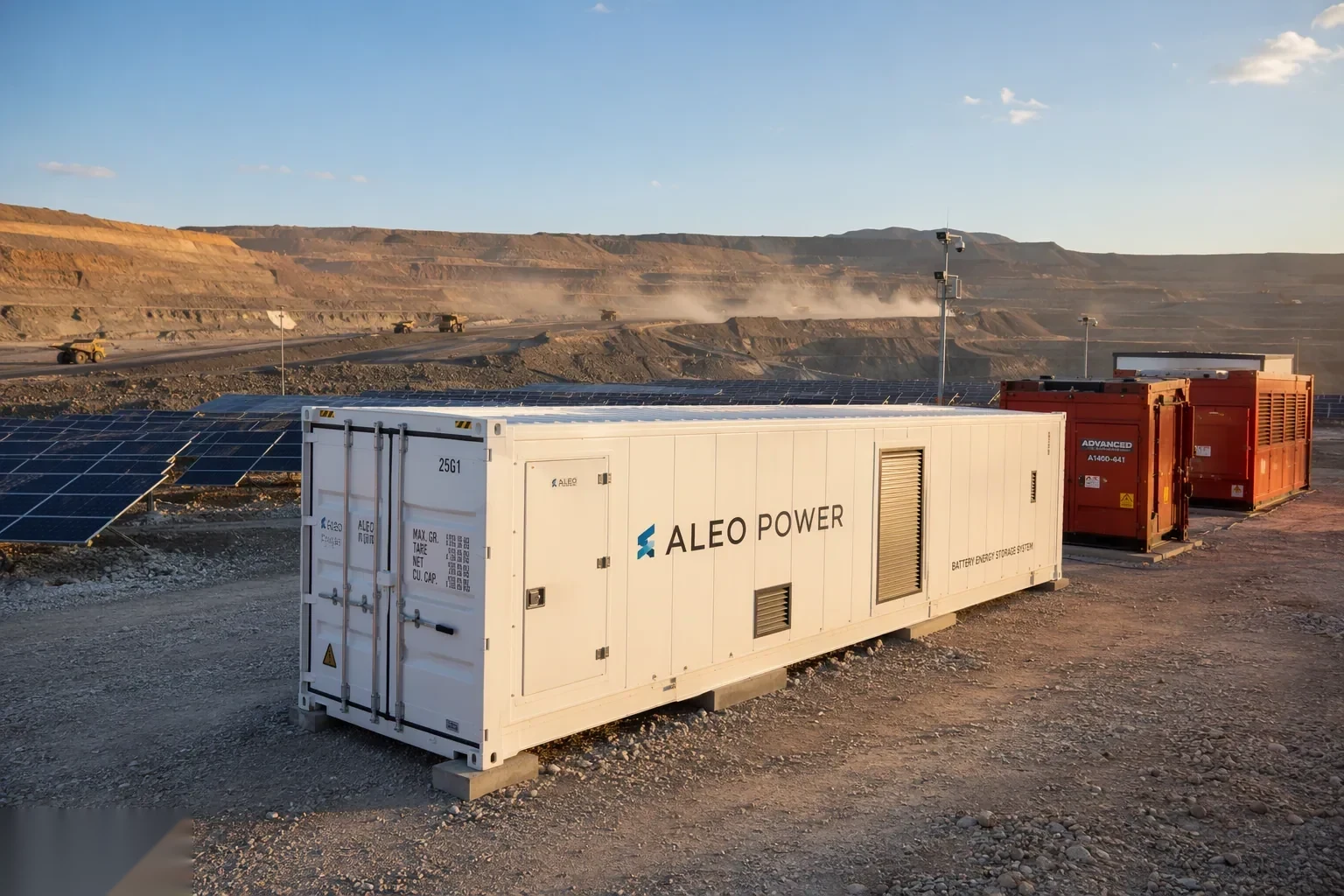
Diesel-only power at remote mines is one of the most expensive ways to generate electricity on earth. A hybrid power system for remote mining — combining solar PV, battery energy storage (BESS), and diesel gensets under one controller — typically cuts diesel runtime by 50–80% while improving power quality and eliminating chronic genset damage from low-load operation.
This guide explains how these systems work, how to size one for your site, what the hardware must survive, and what to verify before you sign a purchase contract. It is written for mine energy managers, EPC contractors, and procurement teams evaluating off-grid or weak-grid power — and it draws on ALEO POWER's delivered project data from mining and remote industrial sites, including a 1.5 MW / 2.58 MWh PV–ESS–diesel microgrid in Zimbabwe and containerized ESS running at 3,600 m altitude in China.
Key Takeaways
- ✓Hybrid PV + BESS + genset systems reduce diesel runtime 50–80% in typical remote mining duty.
- ✓The controller — not the battery — decides most of your fuel savings. Demand an energy management system (AMS) with genset load-following logic.
- ✓Size the BESS from your load profile, not from PV capacity. A storage-buffered genset layout usually needs 0.5–2 hours of autonomy at average load.
- ✓Specify for the environment: IP65 dust sealing, C5 corrosion class, and altitude/temperature derating are not optional at mine sites.
- ✓Verify FAT (factory acceptance test) data and shipment inspection reports before paying the final milestone.
Table of Contents
- 1. Why Diesel-Only Power Fails at Remote Sites
- 2. What a Hybrid PV + BESS + Genset System Actually Does
- 3. Sizing a Hybrid Microgrid: A Worked Example
- 4. Hardware Requirements for Harsh Mining Environments
- 5. Delivered Project Data
- 6. Procurement Checklist: FAT, Shipment Inspection, Commissioning
- 7. FAQ
- 8. Conclusion
1. Why Diesel-Only Power Fails at Remote Sites
Remote mines, exploration camps, and off-grid industrial sites usually start with diesel gensets because they are fast to deploy. The problems appear within months, not years:
Fuel logistics dominate cost. At remote sites, diesel arrives by road convoy or barge. By the time it reaches the generator tank, the delivered cost is commonly 2–4× the pump price — and every liter burned must be replaced on the same expensive logistics chain.
Low-load operation destroys gensets. Mine loads fluctuate heavily: crushers, mills, and conveyors cycle, while camps and offices draw a steady baseload. Gensets running below ~30% rated load for long periods suffer wet stacking (unburned fuel contaminating engine oil), carbon buildup, and accelerated bore wear. In ALEO POWER's site audits, we routinely find gensets at remote sites averaging 25–40% load — deep in the damage zone.
Maintenance coverage is thin. A genset failure at a site 400 km from the nearest service depot can mean days of rental units or lost production. Redundancy is expensive; downtime is worse.
Emissions and noise limits tighten every year. Even where regulation is currently light, ESG reporting and community agreements increasingly penalize diesel-heavy operations.
2. What a Hybrid PV + BESS + Genset System Actually Does
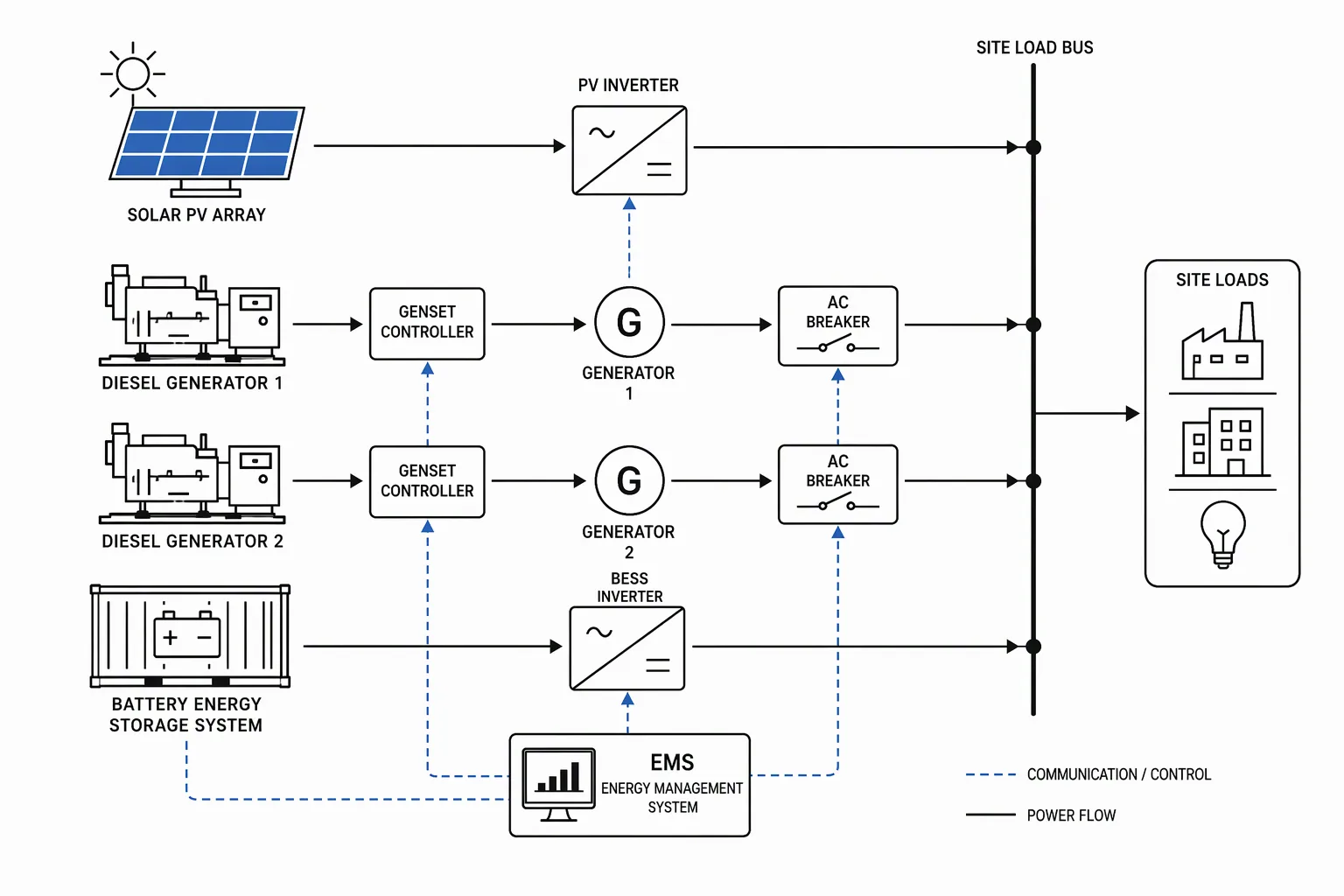
A hybrid microgrid keeps the gensets you already have — but stops asking them to do the wrong job.
The battery becomes the load buffer. The BESS absorbs the swings (a conveyor starting, a crusher cycling) and supplies steady power to the gensets. Gensets then run at a stable 70–90% load — their efficiency and longevity sweet spot.
Solar carries the daytime base. PV output feeds the load directly; the battery stores the midday surplus instead of curtailing it.
The controller decides everything. A purpose-built energy management system — ALEO POWER's AMS core — arbitrates between PV, battery, and gensets in real time: peak-shaving genset loading, enforcing charge floors before evening peak, and starting/stopping gensets only when the battery state of charge demands it. This control logic, not the cell chemistry, is where most of your 50–80% diesel reduction comes from.
Black start and resilience. With grid-forming PCS capability, the BESS can black-start the site and hold voltage/frequency while gensets come online — critical after outages or during maintenance.
3. Sizing a Hybrid Microgrid: A Worked Example
Sizing from PV capacity is a common mistake. Start from the load profile.
Step 1 — Measure the load. Log 2–4 weeks of 15-minute interval data. For a typical remote mine camp plus light process load, assume an average of 300 kW with peaks to 600 kW.
Step 2 — Set the BESS power. The storage must cover peak shaving and PV smoothing: size PCS power to your peak minus one genset block. For 600 kW peaks with 2 × 400 kVA gensets, a 500 kW BESS lets one genset carry the average load while the battery handles everything above it.
Step 3 — Set the BESS energy. Target 1–2 hours at average load for duty-cycle buffering and evening transition: 430–860 kWh. In ALEO POWER's delivered remote-site projects, the 400–500 kW / ~430 kWh class is the most common configuration — enough to keep gensets in their efficient band and shift several hours of PV energy into the evening.
Step 4 — Add PV if the resource allows. PV sized at 1.0–1.5× average load (300–450 kWp here) typically pushes diesel runtime toward the 80% reduction end of the range, assuming reasonable solar resource (≥4.5 peak sun hours).
Step 5 — Plan expansion. Choose modular equipment (paralleling 125 kW cabinets or 20-ft containers) so capacity grows with the mine — containerized ESS parallels as site load grows from camp duty to full process duty.
4. Hardware Requirements for Harsh Mining Environments
Mine-site equipment fails in predictable ways. Specify against these failure modes, not against a datasheet written for a warehouse:
- Dust and ingress: IP65-rated enclosures with filtered, pressurized cooling paths. Our containerized ESS for mining duty uses dust-sealed battery compartments and IP65 connectors.
- Corrosion: C5-M corrosion protection on containers and racking for wet or coastal-adjacent sites. A delivered 500 kW / 430 kWh system in Australia's wet tropics has operated since commissioning with zero enclosure corrosion findings at annual inspection.
- Altitude: Air-cooled equipment derates roughly 10% per 1,000 m above 1,000 m. Our 400 kW / 430 kWh system at a Chinese mine site at 3,600 m altitude required specifically engineered thermal design — a standard catalog unit would have tripped on overheating in its first summer.
- Temperature: Specify cell and PCS derating curves for your ambient range, including −20 °C cold starts or 45 °C+ summer duty. Liquid-cooled LFP cabinets hold temperature spread within ±3 °C, which is why we use liquid cooling as standard on C&I and mining-duty units.
- Fire protection: For enclosed ESS, full-fluid perfluorohexanone suppression provides cell-level protection without water damage to adjacent equipment — a serious consideration where fire brigade response is measured in hours, not minutes.
5. Delivered Project Data
Specification sheets are easy to write; delivered systems are the real test. Three reference points from ALEO POWER's installed base:
- Zimbabwe mining microgrid — 1.5 MW / 2.58 MWh. A PV–ESS–diesel hybrid supplying a remote mining operation. The BESS carries peak loads and solar smoothing, with gensets operating in scheduled, high-load windows only.
- China mine site, 3,600 m altitude — 400 kW / 430 kWh. Containerized ESS engineered for high-altitude thermal performance, deployed as a storage-buffered genset system.
- Australia wet-site diesel hybrid — 500 kW / 430 kWh. Dust- and corrosion-sealed enclosure for tropical, high-humidity duty, integrated with existing gensets.
Across these installations, the pattern is consistent: diesel runtime falls 50–80%, genset maintenance intervals stretch, and power quality at the site bus improves because the battery — not the genset — absorbs transients.
Planning a hybrid retrofit or a new microgrid? Send your load profile — even a rough one — and our engineers will return a preliminary configuration and diesel-saving estimate.
6. Procurement Checklist: FAT, Shipment Inspection, Commissioning
For a capital purchase of this class, structure the contract around verification, not promises:
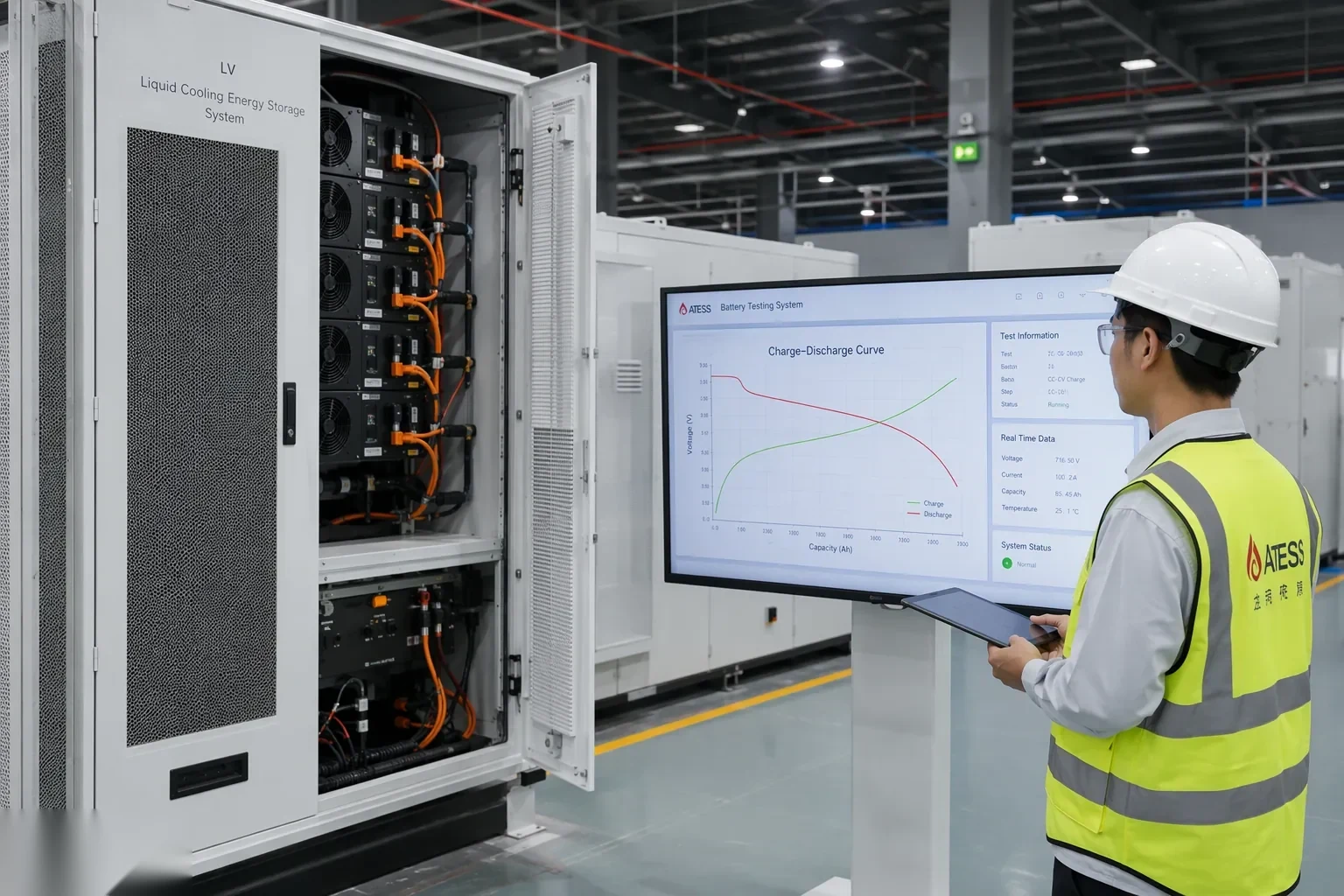
- FAT (Factory Acceptance Test). Witness or review recorded FAT data: full-capacity charge/discharge test, PCS efficiency curve, protection relay tests, and 72-hour continuous operation. ALEO POWER's average contract-to-FAT lead time is 35 days, with FAT documentation shipped to the buyer before dispatch.
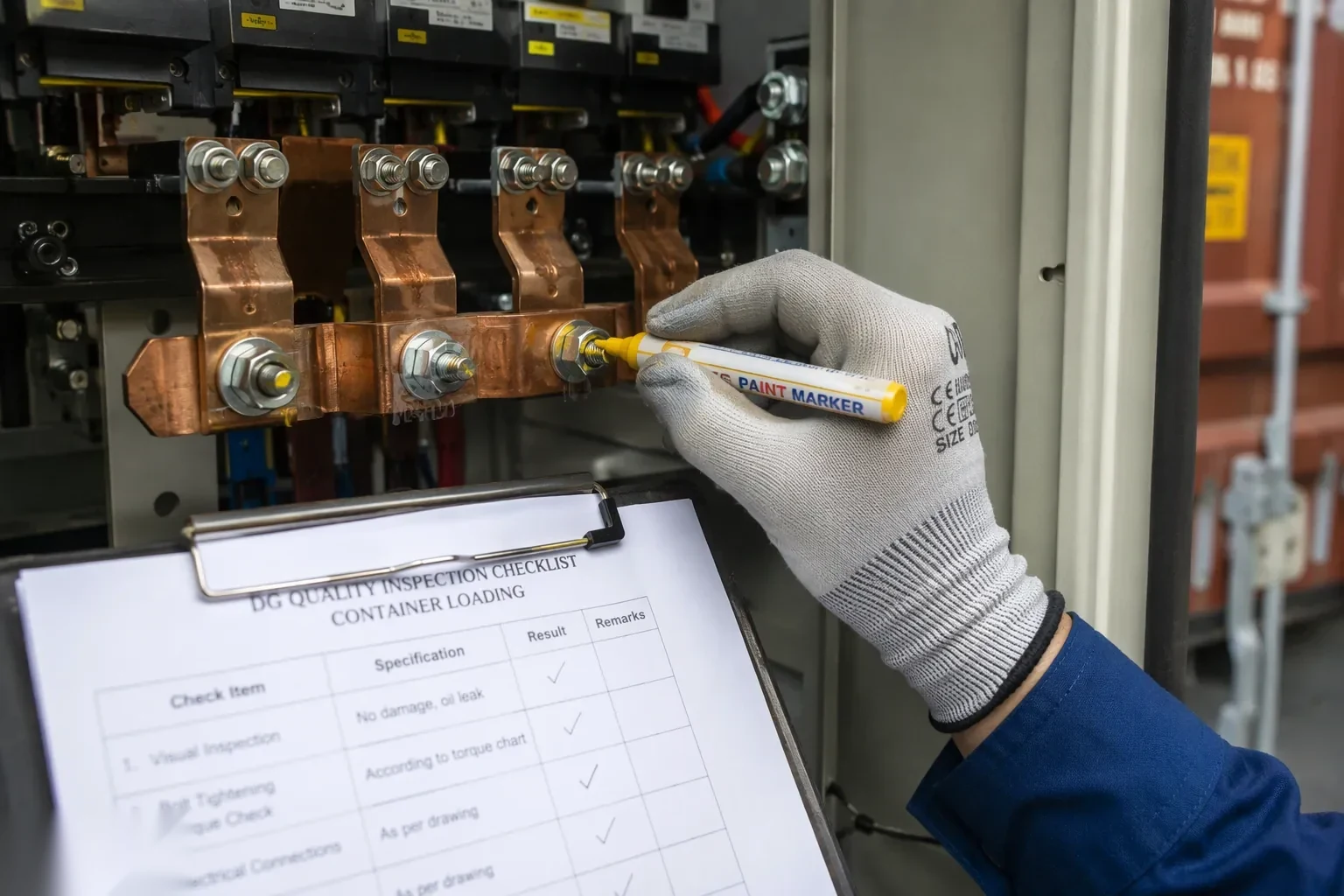
- Shipment inspection. Photograph serial numbers, torque-marked busbars, desiccant and vacuum-sealed cabinet status, and container lashing before closing doors. Request the inspection report with the shipping documents.
- Commissioning support. Remote commissioning guidance is standard; insist on engineer support during first energization and a defined performance demonstration period (e.g., 30-day fuel-consumption verification against the guaranteed figure).
- Warranty and spares. Five-year product warranty is the market baseline for quality suppliers; confirm response SLA for remote sites — ALEO POWER provides 24/7 remote diagnostics with 60+ countries of installed-base experience.
FAQ
Frequently Asked Questions
How much diesel can a hybrid power system save at a remote mine?
What is wet stacking and how does a BESS fix it?
How do I size battery storage for an off-grid mine?
Can a battery storage system black-start a mining site?
What should I check before buying a containerized ESS for a mine site?
Conclusion
A hybrid power system for remote mining is no longer an experiment — it is the standard configuration for sites that have measured their true cost of diesel. The savings case rests on three pillars: a battery that buffers your load, a controller that arbitrates your generation, and hardware specified for your actual environment. Get those right, and a 50–80% diesel runtime reduction is a planning number, not a marketing claim.
ALEO POWER manufactures C&I and containerized energy storage systems — 261 kWh to MWh-scale — in a 40,000+ m² factory, with grid-forming capability, mining-duty environmental protection, and delivered references at altitude, in the wet tropics, and across southern Africa. If you share your load profile and site conditions, our engineers will return a preliminary hybrid configuration and fuel-saving estimate within days.
Talk to a Microgrid Engineer
261 kWh cabinets to MWh-scale containers — built, FAT-tested, and shipped from our own factory in 35 days average.