South Africa · C&I Storage
Load Shedding Solutions for Businesses: Solar + Battery Storage Sizing & Payback
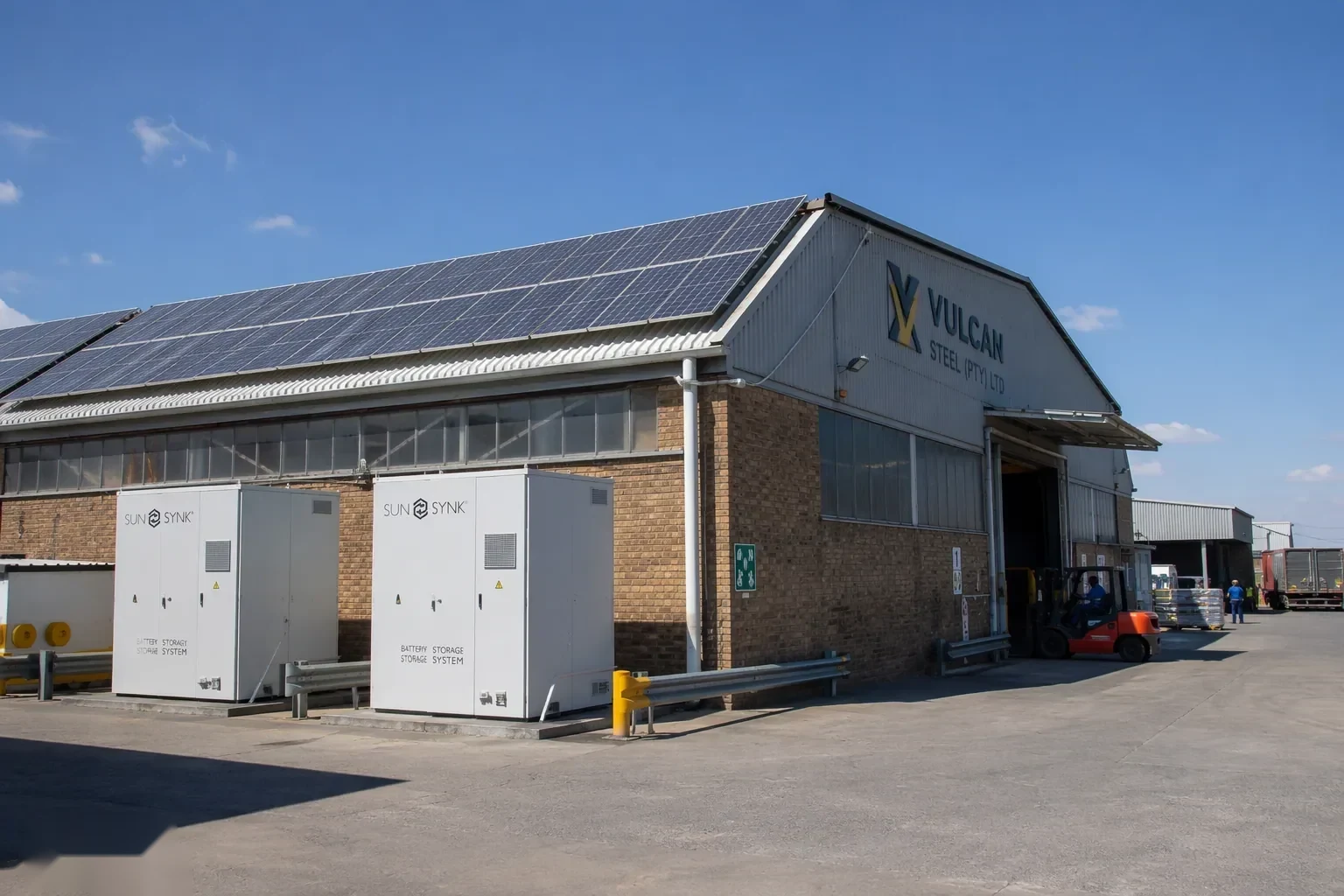
The most durable load shedding solutions for South African businesses share one architecture: solar PV on the roof, battery energy storage (BESS) at the meter, and a controller that decides — second by second — whether the building runs on sun, battery, or the grid. Done properly, the system keeps production running through Stage 4–6 outages and cuts daytime electricity costs at the same time.
This guide compares the real options, shows sizing with a worked factory example, and gives a procurement checklist for SA buyers. ALEO POWER supplies C&I storage for exactly this duty — including the [AP-263/260/262 SL-EU cabinet family with South African grid-code certification](/products/ci-battery-energy-storage) — and this article reflects how we size and commission these systems.
Key Takeaways
- ✓Solar + BESS beats diesel gensets for 2–4 hour outages: no fuel logistics, no noise, and it earns revenue every sunny day through self-consumption.
- ✓Size the battery from the loads you must keep running (kW) and the longest stage you must ride through (hours) — a typical factory lands between 250 kWh and 1 MWh.
- ✓Grid-forming (off-grid capable) inverters matter: not every "solar + battery" system keeps running when the grid drops.
- ✓Check the heat: SA summer ambient temperatures demand liquid-cooled batteries and honest derating curves.
- ✓Buy on evidence: witnessed FAT, shipment inspection, and a local or remote commissioning plan — not on price per kWh alone.
Table of Contents
- 1. What Load Shedding Actually Costs Your Business
- 2. The Four Options, Compared Honestly
- 3. How Solar + BESS Keeps You Running
- 4. Sizing Example: A 500 kVA Factory
- 5. What South African Conditions Demand From Hardware
- 6. Payback: The Numbers Behind the Decision
- 7. Procurement Checklist for SA Buyers
- 8. FAQ
- 9. Conclusion
1. What Load Shedding Actually Costs Your Business
Eskom's load shedding stages translate directly into hours without power — Stage 2 removes roughly 2 hours per day on average, while Stage 6 can take 6+ hours daily, often in blocks that split shifts. (Current schedules are published by Eskom on its official load shedding page; treat any static figure as a snapshot and check the live schedule for your area.)
For a factory, the arithmetic is brutal: every interrupted shift carries restart losses (warm-up, scrap, line rebalancing), and repeated voltage events damage motor drives and control electronics even when power returns quickly. Cold storage and process industries face spoilage on top. Office-based businesses lose productivity in smaller, steadier increments. Multiply by a year of unstable supply and the cost of *not* owning backup power usually exceeds the system's capital cost — which is why C&I storage in South Africa has moved from "nice to have" to standard capex for energy-intensive businesses.
2. The Four Options, Compared Honestly
| Option | Keeps you running? | Running cost | Daily value when grid is fine | Capex |
|---|---|---|---|---|
| Diesel genset | Yes, indefinitely with fuel | High (fuel + maintenance + logistics) | None | Low–medium |
| UPS | Minutes to ~1 hour | Very high per kWh | None | Low |
| Solar only (no battery) | No — shuts down during outages | Low | Good daytime savings | Medium |
| Solar + BESS | Yes, hours per day | Very low | Daily self-consumption + peak shaving | Medium–high |
Diesel remains the right answer for very long outages or sites without roof space — and hybridizing a genset with a BESS reduces its fuel burn when it does run. But for the 2–4 hour blocks that define most load shedding stages, solar + storage wins on total cost because it works for you every single day, outage or not.
3. How Solar + BESS Keeps You Running
A correctly specified system does three jobs at once:
1. Self-consumption. Solar drives the factory directly; the battery absorbs surplus instead of exporting at low feed-in value.
2. Backup on grid failure. When the grid drops, a grid-forming system separates from the utility (anti-islanding), establishes its own voltage and frequency reference, and picks up critical loads within milliseconds to seconds — fast enough for motor drives and servers. Verify this capability explicitly: many standard grid-tied inverters simply shut down during outages.
3. Peak shaving. Discharging during evening peak trims demand charges where tariffs penalize maximum import — a meaningful line item on many SA industrial tariffs.
The controller coordinates all three. ALEO POWER's AMS (Aleo Management System) handles genset integration as well, so sites with existing diesel capacity can hybridize rather than rip and replace.
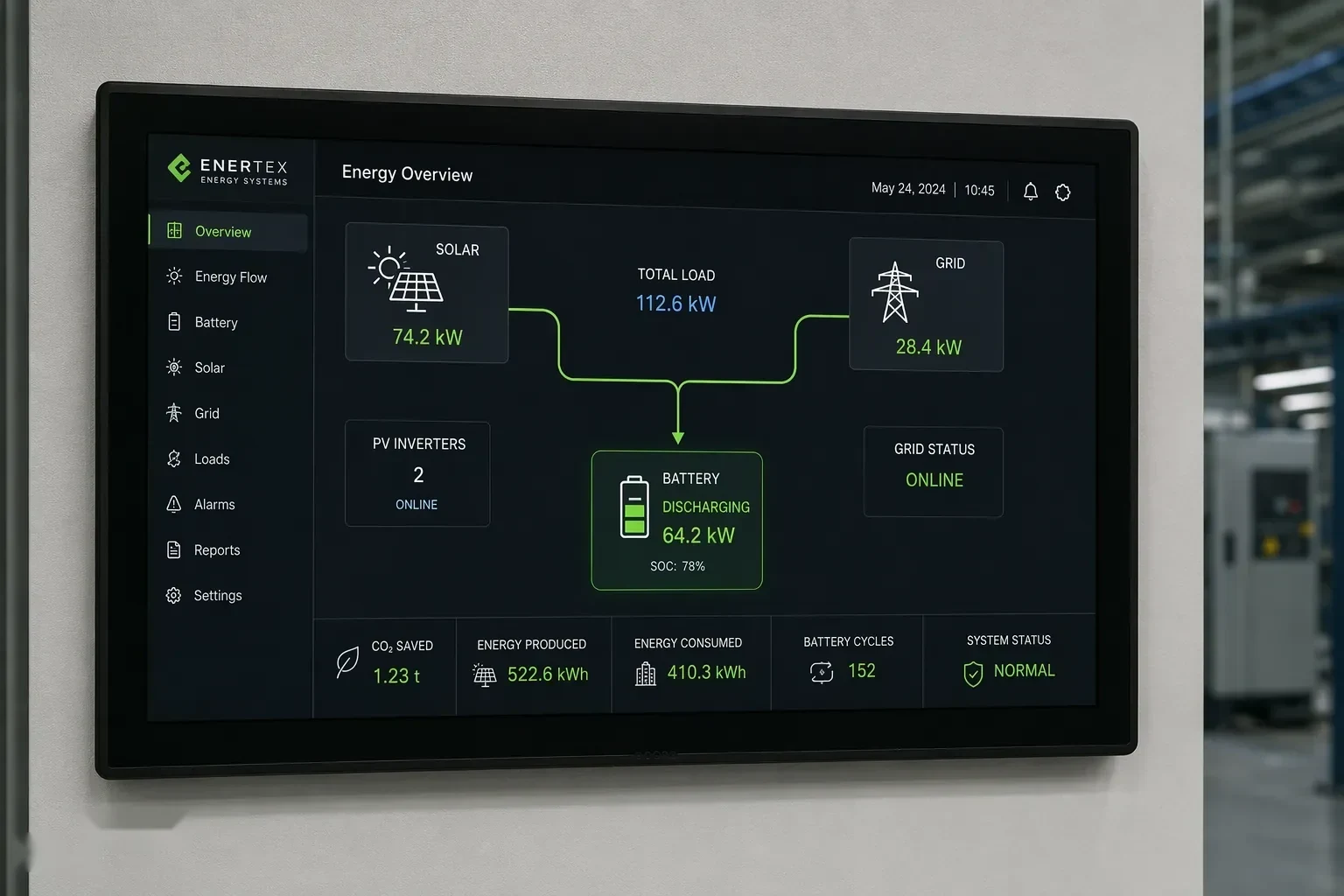
4. Sizing Example: A 500 kVA Factory
Start with what must stay on, not with the roof area.
Step 1 — Critical load audit. Say a 500 kVA factory determines it must keep 200 kW running through outages: cold rooms, compressors, one production line, offices, and security.
Step 2 — Duration. The business decides to ride through a 4-hour stage block: energy required = 200 kW × 4 h = 800 kWh. With depth-of-discharge and aging margin, specify ≥ 870–900 kWh usable — for example, two Aleo-Smart 523 kWh cabinets (1,046 kWh nameplate) give comfortable margin at 90% DoD.
Step 3 — Power. The PCS must start motor loads: 200 kW continuous plus surge. A pair of 125 kW cabinets (250 kW total) covers continuous duty; check compressor and pump starting currents against PCS overload curves.
Step 4 — Solar coupling. PV sized to daily energy — not battery charging alone — determines how much grid energy the site avoids. A 300–400 kWp array on a 200 kW critical load typically covers daytime consumption and recharges the battery between stages.
Step 5 — Growth. Paralleling additional cabinets later is routine; provision space and a busbar plan now rather than retrofitting.
Not sure where to start? Send your critical load list — even a rough one — and we will return a sized configuration with payback assumptions for your tariff.
5. What South African Conditions Demand From Hardware
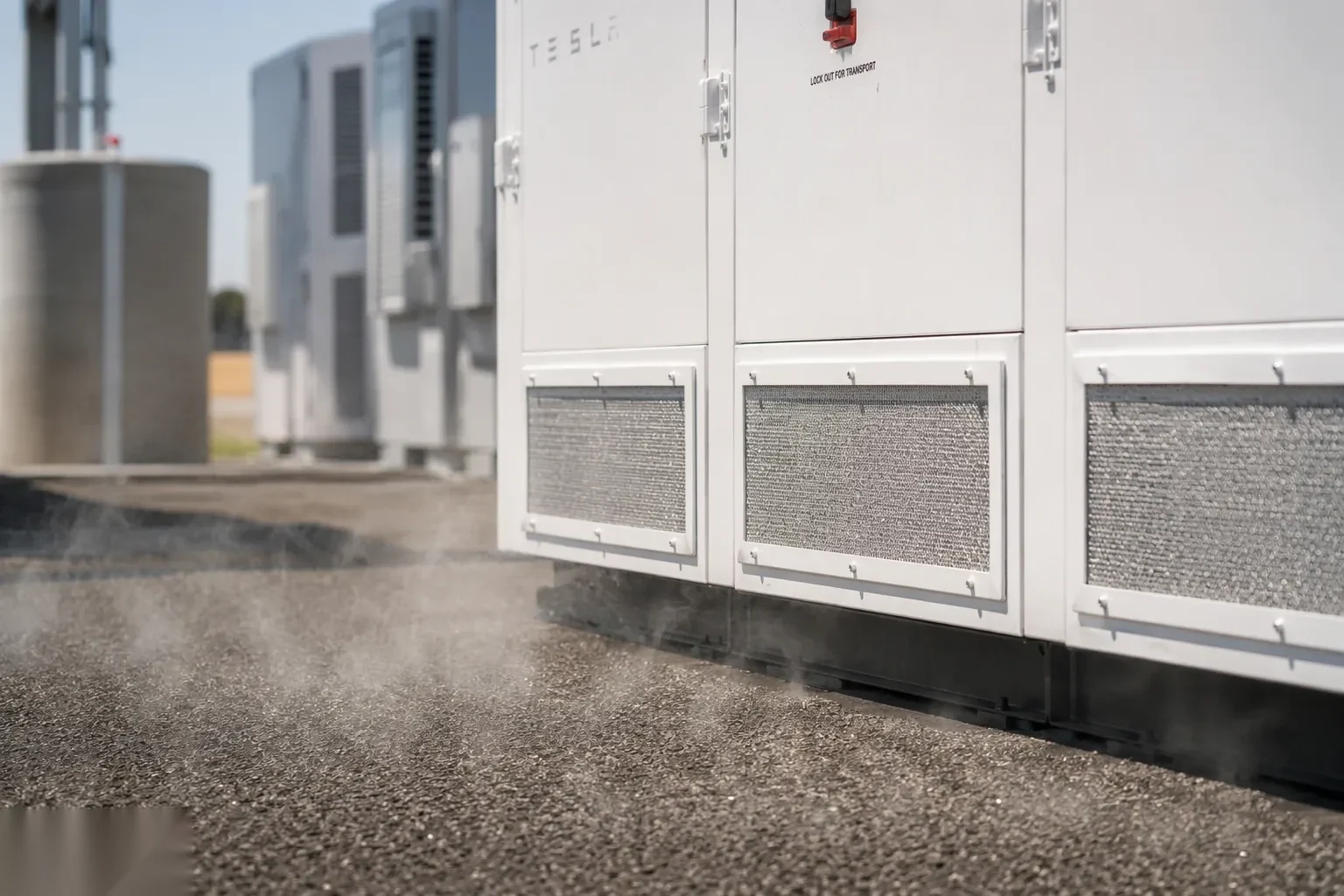
- Heat. Large parts of SA see 35–40 °C+ summer days. Air-cooled batteries lose cycle life in exactly the climate where backup duty is heaviest. Specify liquid-cooled systems with documented derating curves — Aleo-Smart cabinets hold cell temperature spread within about ±3 °C under full load.
- Dust and outdoor siting. Many sites have no spare plant room. Outdoor-rated enclosures (IP54–IP65, C4/C5 corrosion options) avoid building modifications.
- Grid-code compliance. The utility and municipal approval process requires certified equipment. The AP-263/260/262 SL-EU family carries full European and South African grid-code certification, which shortens paperwork substantially.
- Voltage events. SA grids deliver more than outages: sags and surges. A PCS with reactive capability and ride-through specifications protects downstream equipment.
- Fire safety near people. Warehouses and retail sites need engineered suppression — full-fluid perfluorohexanone systems extinguish without flooding equipment with water.
6. Payback: The Numbers Behind the Decision
A solar + BESS system for C&I backup in SA typically pays back through three stacked savings, commonly reaching 4–7 year simple payback depending on tariff, solar resource, and load profile:
- Avoided grid energy. Self-consumed solar displaces daytime purchases at your full tariff.
- Avoided demand charges. Peak shaving trims maximum import where the tariff structure rewards it.
- Avoided outage losses. This is the number that justifies the project: one prevented production halt often equals months of loan payments. Quantify your historical outage cost honestly — restart scrap, overtime, spoiled stock — and include it in the model.
- Optional revenue. Where wheeling or feed-in schemes apply, surplus energy can earn credits.
Diesel gensets, by contrast, have zero daily value between outages: they sit, they age, and they consume maintenance budget. That asymmetry — storage earns daily, gensets only cost — is the core economic argument.
7. Procurement Checklist for SA Buyers
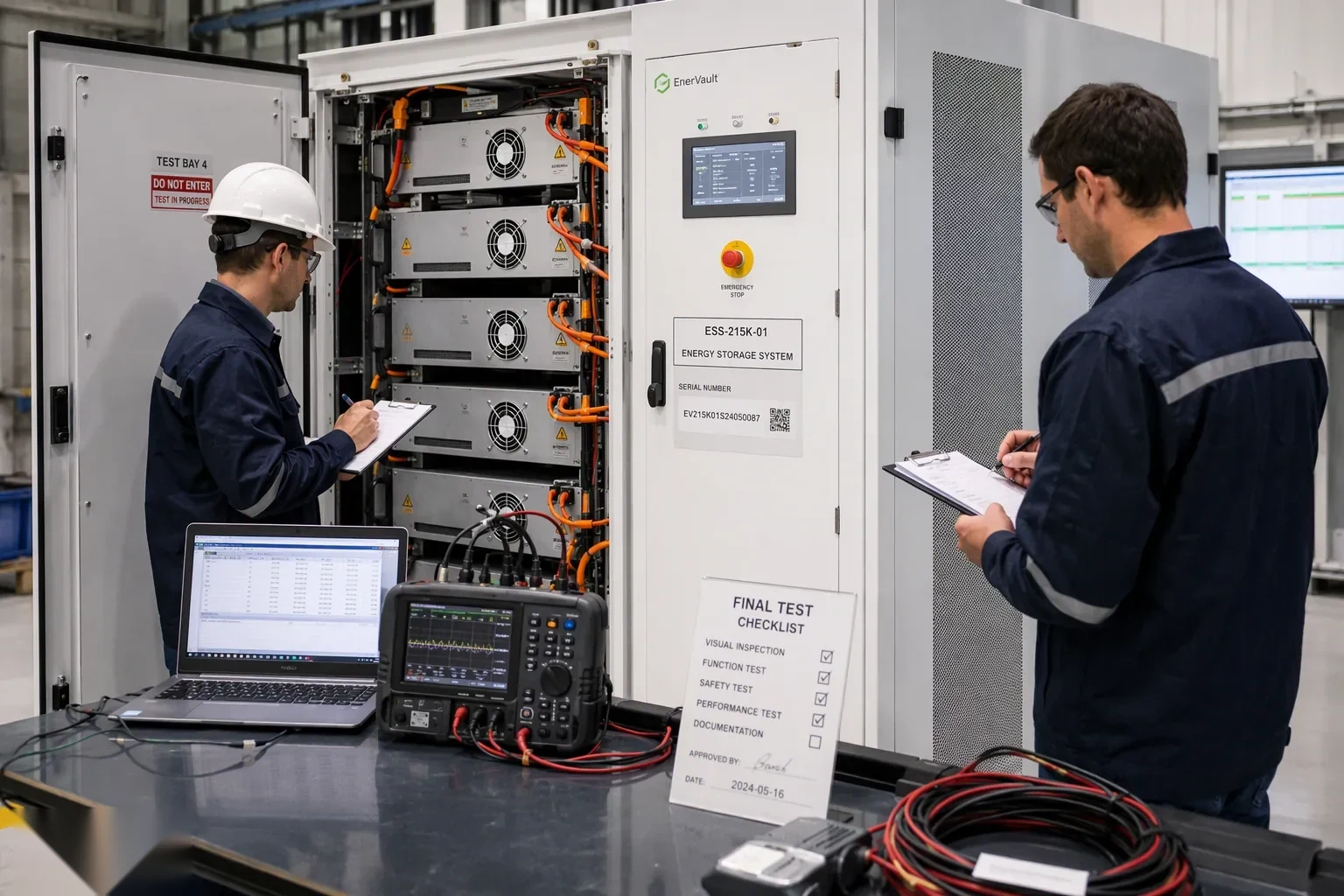
- Grid-code certificates for the exact equipment model (not "family") you are buying.
- FAT evidence — witnessed or recorded: capacity, round-trip efficiency, protection tests, 72-hour continuous run. Standard ALEO POWER lead time is about 35 days contract-to-FAT.
- Shipment inspection report with serial numbers, torque marks, and sealing documentation.
- Commissioning plan naming who energizes, who trains your electricians, and what the 30-day demonstration period measures.
- Warranty in writing: five-year product warranty is the quality baseline; note the throughput cap and degradation floor.
- Support reality: 24/7 remote diagnostics matter for a country where specialist technicians are scarce — confirm the SLA.
- Local partners: clarify whether the supplier works with SA installers/EPCs for electrical balance-of-plant.
FAQ
Frequently Asked Questions
What is the best load shedding solution for a factory?
How do I size a battery for load shedding?
Can solar panels work during load shedding?
Is a generator or battery better for load shedding?
What does a commercial solar + battery system cost in South Africa?
Conclusion
Reliable load shedding solutions for South African businesses are no longer about surviving the grid — they are about outgrowing it. Solar + battery storage keeps production moving through the stages that define the SA grid, pays for itself through daily self-consumption, and leaves diesel for the rare days it is genuinely needed. Specify for heat, demand grid-forming capability, and buy on FAT evidence — those three decisions determine whether your system performs in year eight as well as year one.
ALEO POWER's Aleo-Smart series (261–523 kWh, 125 kW PCS, liquid-cooled LFP, ≥8,000 cycles at 90% DoD) includes the SL-EU family certified for South African grid codes — FAT-tested in our own factory and supported by 24/7 remote diagnostics. Share your critical load list and outage history, and our engineers will return a sized configuration and payback model.
Keep Production Running Through Every Stage
Aleo-Smart C&I storage — South African grid-code certified on the SL-EU family, liquid-cooled LFP, ≥8,000 cycles, FAT-tested and shipped from our own factory.